The Science / Copper peptide
Copper peptides: the repair signal your skin runs low on
GHK-Cu is a copper-carrying peptide your body uses to repair skin, and makes less of with age. In studies, replenishing it improves firmness, softens fine lines, and evens tone by prompting skin to make new collagen. It works gradually, over months.
GHK-Cu is one of the most studied peptides in skin repair. It is a small copper-binding molecule found naturally in the body. It carries copper, which your cells need to make collagen and elastin, and it signals those cells to produce more. In clinical studies, this improves skin firmness, density, elasticity, and fine lines. Here is what it does, how we use it, and what to expect.
What copper peptides do
GHK-Cu works on the skin's scaffolding. Firm, young skin is held up by a network of collagen and elastin and kept supple by water-binding molecules called glycosaminoglycans. With age, sun, and inflammation, that network thins and loses order: new collagen slows, old fibers stiffen, and the skin holds less water. The visible result is fine lines, laxity, and lost density.
GHK-Cu acts on that network. It signals the cells that build it, the fibroblasts, to make more collagen and elastin, and it delivers the copper those cells need. In 12-week studies of women in their forties and fifties, copper-peptide creams improved firmness, density, and elasticity, softened fine lines, and reduced the mottled pigment of sun damage. In one comparison, collagen rose in 70 percent of women using GHK-Cu, against 50 percent for vitamin C and 40 percent for retinoic acid. GHK-Cu was first studied for wound healing, and its effect on skin uses the same repair process.
How it works
GHK-Cu's most reliable effect comes from copper. Copper is an essential cofactor for the enzymes that build and cross-link collagen and elastin, but loose copper in tissue also drives oxidative damage. GHK binds copper tightly, carries it into skin cells, and delivers it to the enzymes that use it without letting it react freely. This safe delivery is the best-understood part of how it works.
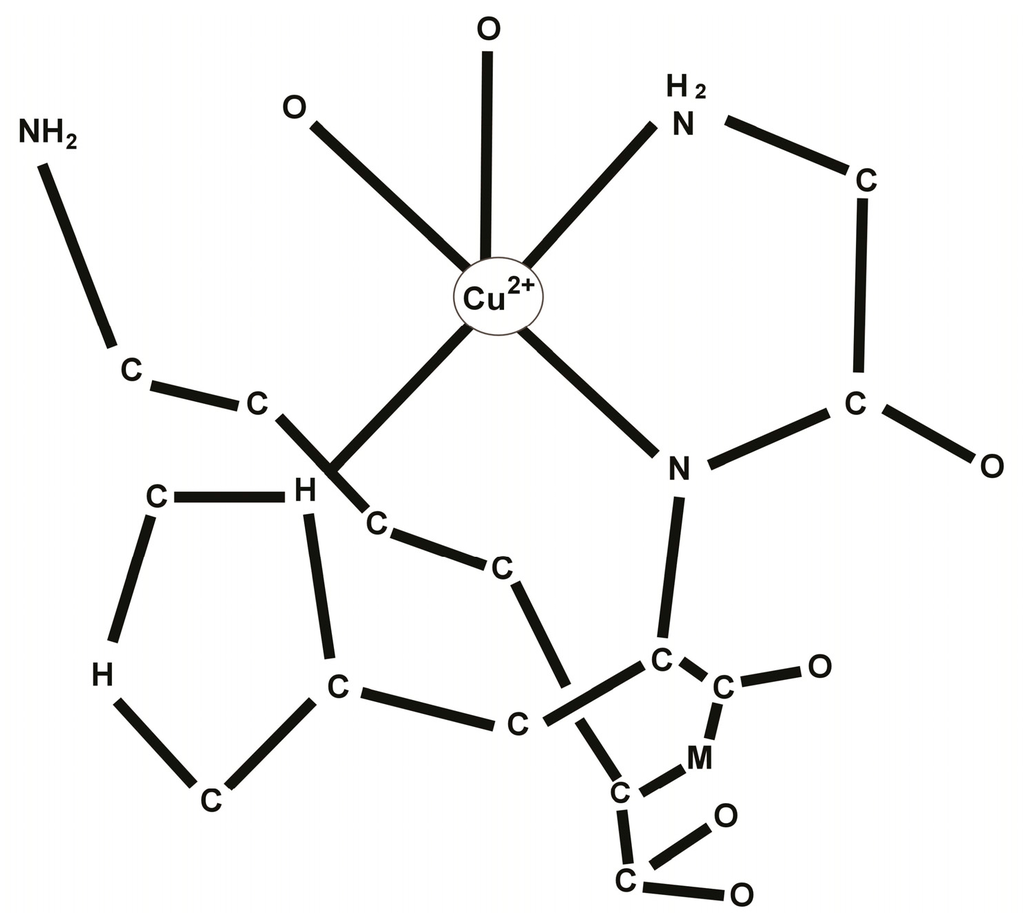
Beyond that, the picture is less settled. In laboratory and cell studies, GHK-Cu prompts fibroblasts to make more collagen, elastin, and the proteoglycans that organize and hydrate the matrix, and it helps balance the enzymes that clear old tissue against the ones that protect new tissue. Part of this appears to involve gene expression: studies show it changes the activity of genes involved in tissue repair and matrix building. But the exact signaling pathway, including which receptor it acts on, remains unclear. The effects are better documented than the mechanism behind them.
GHK is found naturally in blood, saliva, and urine, and its level drops with age, roughly two-thirds lower by 60 than at 20. That decline is the reason for replenishing it.
Does it help hair?
The evidence for hair is smaller and more preliminary. In laboratory studies, GHK-Cu supports the cells at the base of the follicle, the dermal papilla, that control the growth cycle, and it appears to extend the follicle's active growth phase. It can help a follicle that has thinned but is still alive, and it does nothing for one that is already gone. The evidence here is thinner than for skin, so it is best read as promising rather than proven.
How we use it
For skin, GHK-Cu is applied topically, as a serum or cream at about 1 to 2 percent. Because the molecule is fragile, the formulation matters as much as the concentration: a stable, well-delivered, medical-grade product reaches skin in a form that still works. A typical routine starts two or three times a week and builds to daily as skin adjusts, sometimes paired with gentle microneedling to help it absorb. Daily sunscreen is essential, because unprotected sun undoes the collagen you are building.
Do not layer it in the same step with vitamin C, exfoliating acids, or strong retinoids, which can break down the copper complex. Alternate them, morning and evening or on different days. Injectable and compounded forms exist and act throughout the body rather than locally, but they are less established and have drawn regulatory scrutiny over safety. Well-formulated topical use is the default.
Is it safe, and who should avoid it?
Applied to skin, GHK-Cu is well tolerated. It was non-toxic and non-irritating in published trials, it has a long track record in wound care, and the common complaints are mild: some transient irritation, and the short remodeling phase described below.
Still, hold off or talk to a clinician first if any of these apply:
- You are pregnant or breastfeeding, where safety data are insufficient.
- You have Wilson's disease or another disorder of copper metabolism.
- There is an active skin infection where it would be applied.
- You have reacted to a copper peptide product before.
- You are considering injected or compounded forms, which carry the usual sterility and systemic cautions and far less evidence than topical use.
Why the formulation matters
Copper peptides are hard to shop for, which is why a medical-grade treatment is not the same as a drugstore serum. GHK is fragile. It breaks down under oxidative stress, it is degraded by enzymes, and its copper has to be held correctly or it stops working and begins to oxidize. Two products both labeled "1% copper peptide" can behave very differently.
What separates an effective product from a poor one is what the label does not list: purity and true concentration, a pH that keeps the complex intact, a vehicle that carries the molecule into skin, stabilization against oxidation, and packaging that keeps out air and light. The concentration on the label matters less than whether the peptide is still active when it reaches your skin, which is what a medical setting controls for.
What to expect, and what it can't do
GHK-Cu works structurally and slowly. It does not add volume or smooth the skin on contact. It signals your skin and supplies copper, and your own cells do the rebuilding over weeks and months. Because it also clears old, damaged collagen as it builds new, some people go through a brief rough patch around weeks three to five, informally called the copper uglies, when the old matrix is cleared faster than the new is built. It settles on its own, and starting slowly keeps it mild.
It has clear limits. It improves skin that can still respond, but it will not erase deep static wrinkles, lift significant sagging, or replace lost volume; those need a different treatment. Judged at three months rather than three days, it produces firmer, better-quality skin.
It does not add volume or smooth skin on contact. It rebuilds, over weeks and months.
What the evidence shows, and where it's still thin
The strongest evidence for copper peptides is the basic science. The biochemistry of copper delivery is well understood, the safety record is excellent, and cell, animal, and small human studies point consistently toward more collagen and better-quality skin.
The evidence is also still thin in places. Much of it is laboratory and small-study work rather than large, independent trials of GHK-Cu on its own, and some of the broader claims made for it, such as reprogramming gene activity wholesale, are not established and are best set aside. The mechanism is sound and the results are encouraging, but the largest, most definitive trials have not yet been done.
Common questions
How does it feel to use?
Like a serum. It is applied to the skin, not injected, and most people feel nothing beyond a light finish. We sometimes pair it with gentle microneedling to help it absorb.
When will I see results?
Smoother texture in a few weeks, firmness over two to three months, and the most change by three to six. Consistent use matters more than strength.
What are the "copper uglies"?
A brief phase around weeks three to five when the peptide clears old, damaged collagen faster than it replaces it. Starting two or three times a week keeps it mild, and it settles on its own.
Can I use it with vitamin C, retinol, or acids?
Not in the same step, since they can break down the copper complex. Alternate them, morning and night or on different days.
Will it regrow my hair?
It may support thinning-but-living follicles, and it does nothing for follicles that are already gone. The hair evidence is preliminary.
Is it safe in pregnancy?
There is not enough data to say, so it is better to wait.
- Pickart L, Vasquez-Soltero JM, Margolina A. GHK Peptide as a Natural Modulator of Multiple Cellular Pathways in Skin Regeneration. BioMed Research International, 2015.National Library of Medicine, PMC
- Pickart L, Margolina A. Regenerative and Protective Actions of the GHK-Cu Peptide in the Light of the New Gene Data. Int. J. Mol. Sci., 2018.National Library of Medicine, PMC
- Pickart L, Vasquez-Soltero JM, Margolina A. GHK-Cu may Prevent Oxidative Stress in Skin by Regulating Copper and Modifying Expression of Numerous Antioxidant Genes. Cosmetics, 2015. (Figure 1 source.)MDPI Cosmetics
- GHK-Cu Peptides: Benefits, Dosage, and How It Works for Skin and Hair.Plastic Surgery Key
No commitment. We will email you about events and our opening date.